

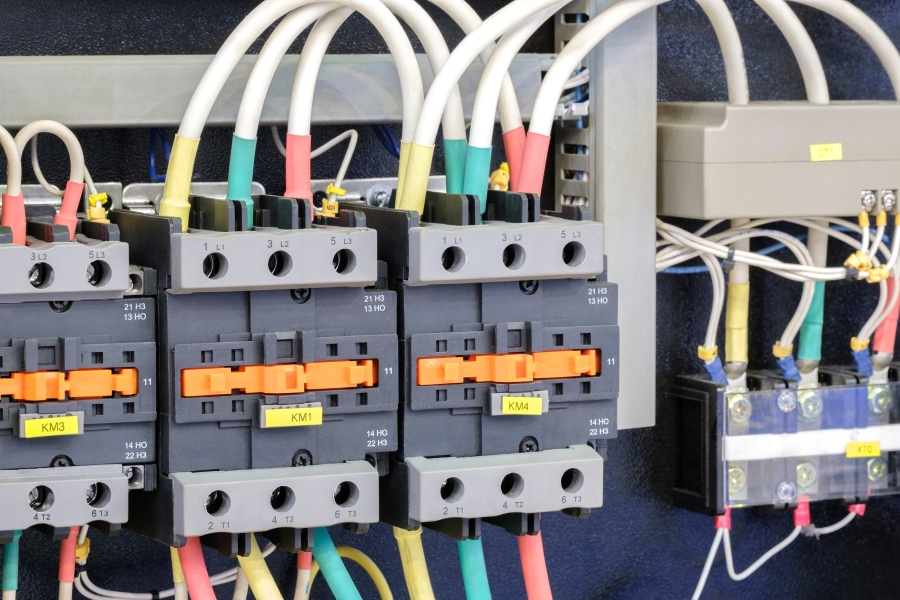
What Makes Commercial Wiring Different from Residential
Residential wiring is built around predictable, low-demand circuits: lighting, appliances, HVAC. Commercial electrical wiring operates on a different scale entirely. Heavier wire gauges, more intricate conduit systems, and three-phase power distribution carry amperage levels that residential infrastructure is never engineered to handle. Add high-demand equipment cycling on and off throughout the day across Front Range facilities, and the stress on conductors and overcurrent protection devices is sustained in a way that has no residential equivalent.
Compliance compounds that complexity. The NEC establishes the baseline, but Colorado-adopted amendments and local jurisdiction requirements in the Mile High City, Aurora, Lakewood, and Jefferson County layer additional obligations on top. What clears inspection in one municipality doesn't always hold true three miles over.
What Goes into a Commercial Rewire in Littleton
Take a converted warehouse in RiNo. The bones are solid. The layout works. But the electrical infrastructure was sized for a different tenant, a different era, and a fraction of the current demand. One question has to come before any installation plan: what can this building genuinely support?
Panel capacity determines the answer. If the service entrance can't carry the intended draw, upgrading individual circuits solves nothing. Wire gauge, conduit type, circuit count, and wall and ceiling accessibility all shape the scope of work. Buildings in Baker, Five Points, or Curtis Park, originally built for light commercial use and later converted, almost always need a full infrastructure review before any scope gets locked.
A panel failure mid-production run, a refrigeration outage near Commerce City, a failed inspection that delays a lease start by weeks: none of those outcomes gives advance notice. They land after the window to address them cheaply has already closed.
When a Load Evaluation Makes Sense
A load evaluation makes sense any time a commercial property has added equipment, changed use, or gone through tenant improvements without a corresponding review of panel capacity and electrical infrastructure.
Most electrical systems don't fail loudly. Demand creeps upward, headroom narrows, and the margin between normal operation and a real problem quietly disappears. Knowing the early warning signs is a starting point, but a formal audit tells you where the system stands right now, not where it was designed to stand years ago.
For commercial wiring in Littleton, load evaluations become increasingly important as buildings evolve. New equipment, tenant improvements, expanded office space, refrigeration systems, or EV charging all change the electrical demand profile of a property. A load evaluation measures those changes before they begin limiting day to day operations.
Colorado Code Compliance Is Not Optional
Unpermitted electrical work has a way of surfacing at exactly the wrong time. A property sale, a refinance, an insurance review: any of those can expose modifications that were never permitted, halting transactions and triggering remediation on a schedule the property owner doesn't control. In Colorado, licensed electricians are required for all commercial work regardless of scale, and Denver, Jefferson County, and Arapahoe County each run their own inspection timelines. Missing a step means absorbing delays that better coordination would have prevented.
Evaluate Your Commercial Wiring in Littleton Before It Becomes Urgent
Growth changes the demand profile of a building faster than most teams anticipate. New equipment, EV charging, converting Gateway warehouse space into an automated distribution operation: every upgrade pulls more from the system. For commercial wiring in Littleton, sizing for today and overlooking the next eighteen months means doing the same work twice.
The businesses that handle this well aren't reacting to failures. They're running assessments before capacity forces the conversation. P&L Electric partners with facility managers, property owners, and general contractors across the Denver metro on commercial electrical wiring evaluations, upgrades, and full installations built to perform long-term. Our team brings hands-on experience across warehouse conversions, tenant build-outs, and industrial facilities throughout Colorado.
If you are planning an expansion or want to know where your system stands before something forces the issue, contact us today to schedule a site visit.