

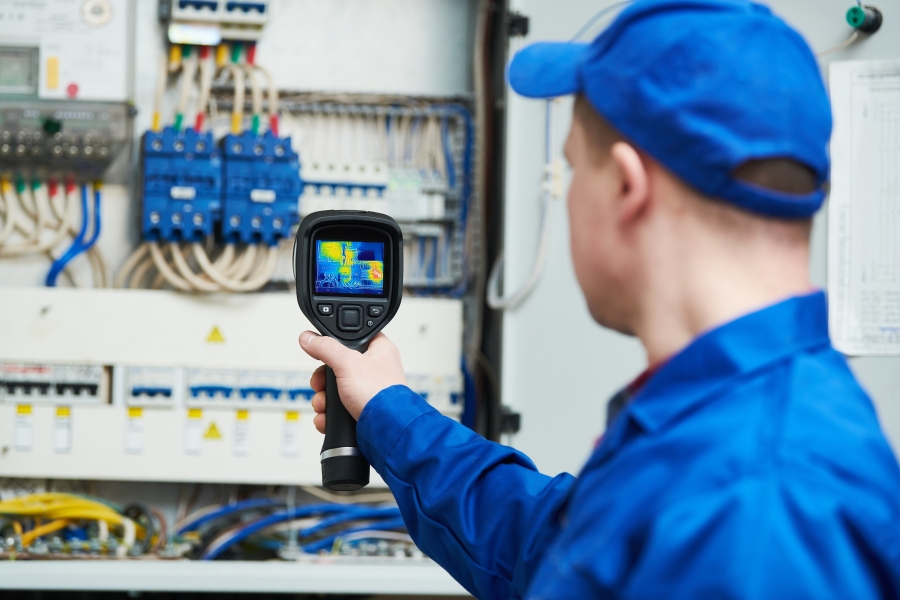
Modern facilities rely on structured commercial preventative electrical maintenance programs to stay ahead of these risks. These programs use diagnostic testing, thermal imaging, and system analysis to identify early-stage stress across switchgear, panels, feeders, grounding systems, and overcurrent protection devices, before performance declines or failures occur. In Colorado’s demanding operating conditions, electrical reliability directly impacts uptime. Temperature swings, altitude, and shifting load demand place added stress on distribution systems. Consistent evaluation stabilizes performance, protects critical assets, and supports safe, uninterrupted operations.
What Commercial Electrical System Maintenance Covers
Effective electrical maintenance relies on diagnostic testing, thermal imaging, and protection coordination to detect imbalance and overheating before failure occurs. A properly engineered maintenance plan evaluates switchgear, breakers, grounding systems, and distribution panels through infrared thermography, load studies, torque verification, and trip testing. These assessments confirm phase balance, conductor capacity, and protection response while identifying harmonic distortion, voltage sag, and power factor issues that shorten equipment life. Thermal scans expose resistance and overload. Load studies verify amperage alignment with panel ratings. Advanced monitoring and condition-based analytics, reflected in ongoing maintenance innovations, strengthen reliability planning and system performance. The objective is simple: detect stress early and correct it before operations are affected.
The Financial and Operational Risk of Deferred Maintenance
Electrical failures develop progressively. Resistance increases. Heat accumulates. Components degrade. Protection devices trip under load. When interruption occurs, the impact extends well beyond a breaker reset.
Deferred service can lead to:
- Unplanned production shutdowns
- Equipment damage or premature replacement
- Arc flash exposure
- Increased insurance scrutiny
Facilities that prioritize structured electrical evaluations consistently experience lower lifecycle costs and improved equipment longevity. Maintenance documentation also supports insurance audits and regulatory reviews. For operations running continuous shifts, downtime is rarely isolated. It cascades across departments and delivery schedules.
Commercial Electric Installation and Long-Term Reliability
Growth shifts electrical demand. Additional equipment, expanded square footage, and higher amperage draw alter load dynamics. This is where commercial electric installation and long-term service planning align. Service capacity must reflect projected expansion. Switchgear must accommodate future feeder additions. Protection coordination must match updated fault current calculations. Generator integration requires proper transfer switching and grounding configuration.
Well-designed commercial electric installation includes:
- Accurate load forecasting
- Fault current analysis
- Three-phase distribution balancing
- Backup power coordination
- Scalable panel and bus design
When infrastructure planning anticipates growth, ongoing commercial electrical system maintenance becomes predictable and data-driven rather than reactive.
Electrical Performance in Colorado Operating Conditions
Colorado’s operating environment introduces additional electrical strain. Rapid temperature shifts affect conductor expansion and contraction. Altitude influences equipment performance. Severe weather increases HVAC demand, while seasonal industrial activity shifts load patterns across distribution networks. Thermal movement gradually loosens connections and accelerates insulation wear. Peak demand periods elevate stress on feeders and panels. Structured service planning accounts for these variables through seasonal inspections, load monitoring, and targeted thermal diagnostics, ensuring electrical infrastructure adapts alongside facility growth.
Strengthening Reliability Before Failure Occurs
Electrical performance directly supports productivity, compliance, and long-term profitability. Proactive commercial electrical system maintenance reduces emergency response frequency, stabilizes power quality, and extends equipment service life. Our certified electricians at P&L Electric evaluate distribution systems with a focus on load stability, code compliance, arc flash mitigation, and expansion readiness. Each assessment reflects decades of experience across Colorado’s commercial, industrial, and agricultural sectors. If your facility has not undergone a recent evaluation, this is the right time to identify vulnerabilities before they affect uptime.
Stable electrical infrastructure protects revenue, supports workforce safety, and reinforces operational continuity. A structured maintenance plan ensures your systems remain aligned with current demand and future growth. Contact us today to develop a performance-driven maintenance strategy that keeps your facility operating without interruption.